
KYC at Offshore Casinos — Less Upfront, More Unpredictable
Most non-GamStop casinos let you play without verifying identity first. The check comes later. This is one of the most noticeable differences between the UKGC-regulated and offshore casino experiences. At a UKGC casino, enhanced identity verification has become increasingly front-loaded — operators request proof of identity, address, and sometimes source of funds before you can deposit or shortly after your first deposit. The process can feel intrusive, but it is predictable: you know what is required and when.
At non-GamStop casinos, the typical pattern is reversed. Registration requires minimal information — an email address, a username, and sometimes a phone number. Some platforms allow you to deposit and play within minutes of signing up, with no identity documents submitted. The casino defers verification until a trigger event — usually your first withdrawal request, or when your cumulative deposits or winnings reach a threshold defined in the casino’s internal compliance procedures.
This deferred approach feels convenient at the point of registration but creates friction at the point of withdrawal. A player who has been playing for hours, accumulated winnings, and submitted a withdrawal request is then asked to provide identity documents and wait for verification before the payout is processed. The delay is frustrating not because the verification itself is unreasonable — it is a standard compliance procedure — but because the timing creates a gap between the expectation of receiving funds and the reality of an administrative process that can take hours or days.
Understanding when KYC triggers, what documents you will need, how long the process takes, and what can go wrong equips you to manage the experience rather than being surprised by it. The goal is not to avoid KYC — it is a legitimate and necessary process — but to prepare for it proactively so that it does not become the bottleneck between your play and your payout.
When KYC Triggers and What Documents You’ll Need
First withdrawal usually triggers the first verification request. This is the most common trigger at non-GamStop casinos, and it applies across the majority of Curacao-licensed and Anjouan-licensed platforms. The casino allows deposits and play without verification, but the moment you request a withdrawal, the compliance team initiates the KYC process. Your withdrawal is placed on hold — “pending verification” — until the required documents are submitted and approved.
Other common triggers include reaching a cumulative deposit threshold (often £2,000 or equivalent), winning above a certain amount in a single session, requesting a withdrawal above the casino’s standard limit, or being flagged by the casino’s internal risk monitoring system for any reason. These triggers are not always disclosed in the casino’s terms, which means you cannot predict exactly when verification will be required. The safest assumption is that it will be required at some point, and the most common point is your first withdrawal.
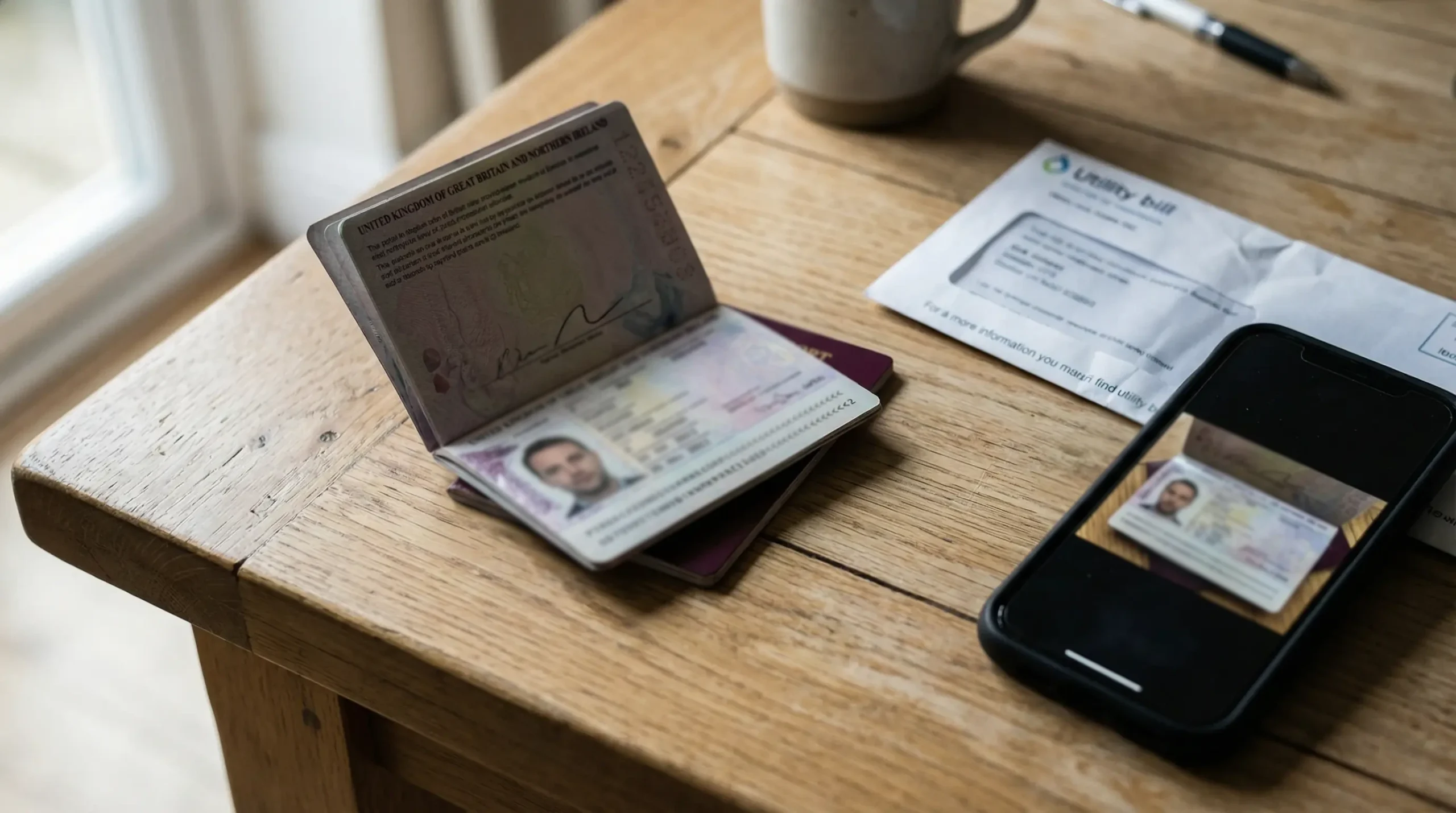
The standard document set requested by non-GamStop casinos includes three categories. Proof of identity: a valid government-issued photo ID, typically a passport or driving licence. The document must be in-date, clearly legible, and show your full name and date of birth. Some casinos accept national identity cards; others insist on a passport. Proof of address: a utility bill (electricity, gas, water, broadband), bank statement, or government correspondence dated within the last three months, showing your full name and current residential address. The document must match the name on your photo ID and the address you registered with at the casino. Proof of payment method: a photograph or screenshot of the payment method used for deposits. For debit cards, this means a photo of the card showing the last four digits and cardholder name (with the remaining digits covered for security). For e-wallets, a screenshot of the account showing your name and registered email. For cryptocurrency, a screenshot of the wallet transaction history showing the deposit to the casino.
Some casinos request additional documentation depending on the circumstances. Source of funds documentation — payslips, tax returns, or bank statements showing income — may be required for larger withdrawals or if the compliance team has questions about the origin of your deposited funds. This request is less common at non-GamStop casinos than at UKGC sites, but it occurs, particularly at casinos with MGA licences or those that maintain stricter voluntary compliance standards.
The format requirements matter. Documents submitted as photographs (taken with a phone camera) must be in colour, fully visible within the frame, and free from glare or shadow that obscures text. Screenshots must show the full page, not a cropped section. PDFs of bank statements or utility bills are generally accepted, but some casinos require them to be stamped or verified as original rather than downloaded from an online banking portal. Submitting documents that do not meet the casino’s format requirements results in rejection and resubmission, adding days to the verification timeline.
Verification Speed — What to Expect and How to Prepare
Having documents ready before your first withdrawal saves days of waiting. The verification timeline at non-GamStop casinos varies by operator but follows a general pattern: document submission (immediate), initial review (1 to 24 hours at responsive casinos, up to 72 hours at slower ones), additional document requests if the initial submission is incomplete or unclear (adds another cycle of submission and review), and final approval (immediate once all documents are accepted). The total timeline from first submission to verified status ranges from a few hours at the most efficient operators to five or more business days at slower ones.
The single most effective step you can take to accelerate verification is to submit your documents proactively — before you request your first withdrawal. Many non-GamStop casinos allow you to upload verification documents through your account settings at any time, even if the casino has not yet requested them. Doing this immediately after registration, while the process is not time-sensitive and you have no pending withdrawal creating urgency, means that by the time you do request a payout, your account is already verified or the review is already underway.
Preparation involves having the documents ready on your phone. Take clear photographs of your passport or driving licence before you need them. Download a recent utility bill or bank statement as a PDF. Screenshot your e-wallet account page or crypto wallet showing your name and transaction history. Store these files in an accessible folder on your device. When the verification request arrives — whether proactively or at the withdrawal stage — you can submit everything immediately rather than scrambling to locate documents while your withdrawal sits in a pending queue.
Communication with the casino’s support team during verification can significantly affect the timeline. If your submission is rejected or additional documents are requested, responding promptly — within hours rather than days — keeps the review process moving. At casinos with live chat support, you can often clarify document requirements in real time, avoiding the back-and-forth of email-based communication. Asking support to confirm exactly what is needed, in what format, and from what date range before resubmitting reduces the probability of a second rejection.
What Happens When KYC Fails or Gets Delayed
A failed KYC can freeze your balance indefinitely at some offshore sites. This is the scenario that makes proactive verification important — not because it is common, but because its consequences are severe and the player’s recourse is limited.
The most common reason for KYC failure is a mismatch between the information on your documents and the information in your casino account. A name spelled differently on your passport than on your utility bill. An address that has changed since you registered. A payment method that does not match the depositing account. These discrepancies are typically resolvable — you update your account details, provide additional documentation to explain the mismatch, or contact support to clarify — but each resolution cycle adds time and requires the compliance team to review the updated submission.
More problematic failures include expired documents (a passport past its expiry date is not accepted for KYC regardless of whether it was valid when you registered), documents from a jurisdiction the casino does not accept (some casinos restrict player registrations by country and may reject documents that indicate residency in a restricted market), and suspected document manipulation (any evidence of digital alteration to uploaded documents results in immediate rejection and potential account closure).
When KYC is delayed — whether due to resubmission cycles, slow response times from the compliance team, or complex cases requiring additional review — your withdrawal remains in a pending state for the duration. During this period, your funds are accessible in your account but not withdrawable. Some casinos restrict continued play on pending-withdrawal balances; others allow it, which creates the risk of playing through (and potentially losing) the funds you intended to withdraw while waiting for verification to complete. If you have a pending withdrawal and your KYC is delayed, the safest approach is to stop playing until the withdrawal is processed.
In worst-case scenarios — the casino determines that your account violates its terms of service based on the KYC review, or the casino closes or restructures during your verification process — your balance can be frozen without clear resolution. At UKGC casinos, the regulator provides an escalation path for these disputes. At offshore casinos, the available recourse depends on the licence jurisdiction and the casino’s willingness to engage with complaints. This imbalance of power is the core argument for proactive verification: resolving your identity confirmation early, before significant funds accumulate in your account, limits your exposure to the worst-case scenario.
Verify Early, Withdraw Smoothly
Proactive verification removes the most common withdrawal bottleneck. It takes ten minutes — photograph your ID, download a recent bill, screenshot your payment method, upload everything through your account settings — and it eliminates the delay that turns a straightforward withdrawal into a multi-day administrative process. Every experienced non-GamStop player learns this lesson eventually. Most learn it the hard way, watching a withdrawal sit in “pending verification” while documents are gathered, submitted, rejected, revised, and resubmitted.
KYC is not an obstacle. It is a compliance process that protects both the casino and the player against fraud and identity misuse. The process itself is reasonable. The frustration arises from its timing — when it arrives unexpectedly at the moment you are trying to access your winnings. Removing the timing surprise by verifying early transforms KYC from a withdrawal barrier into a completed administrative step. Verify when there is nothing at stake. Withdraw when verification is already done. The order matters more than the process itself.