
Why Crypto Dominates Non-GamStop Banking
UK banks block offshore casino payments. Crypto routes around that entirely. That is the core reason cryptocurrency has become the default banking method at casinos not on GamStop, and every other advantage — speed, privacy, lower fees — is secondary to this fundamental reality.
The blocking problem is structural. Since the UK Gambling Commission requires all licensed operators to participate in GamStop, the major UK payment processors and card networks have aligned their fraud detection and compliance systems accordingly. Transactions to offshore gambling sites are frequently flagged, declined, or reversed by UK banks, particularly the high street names. Barclays, HSBC, Lloyds, and NatWest all actively monitor for gambling-related transactions, and payments to unlicensed offshore casinos trigger intervention far more often than not. The result is that traditional fiat banking — which works seamlessly at UKGC-regulated casinos — becomes unreliable or unavailable when UK players attempt to use it at non-GamStop sites.
Cryptocurrency bypasses this barrier because crypto transactions do not route through the banking system. When you send Bitcoin or USDT from your personal wallet to a casino’s wallet address, no bank is involved in the transfer. There is no card network to decline the payment, no compliance team to review it, and no automated fraud filter to block it. The transaction exists on the blockchain, verified by the network’s consensus mechanism, and completes independently of any financial institution’s policies on gambling.
This functional advantage has shaped the entire non-GamStop casino ecosystem. Operators design their platforms around crypto-first banking because it is the most reliable method for their UK player base. Welcome bonuses are frequently denominated in Bitcoin or offer enhanced terms for crypto deposits. Withdrawal processing for crypto is faster than any fiat method because the casino does not need to coordinate with a third-party payment processor. The infrastructure that was built to solve the banking access problem has evolved into a competitive advantage that now defines the non-GamStop experience for UK players.
Bitcoin vs USDT vs Ethereum — Choosing the Right Coin
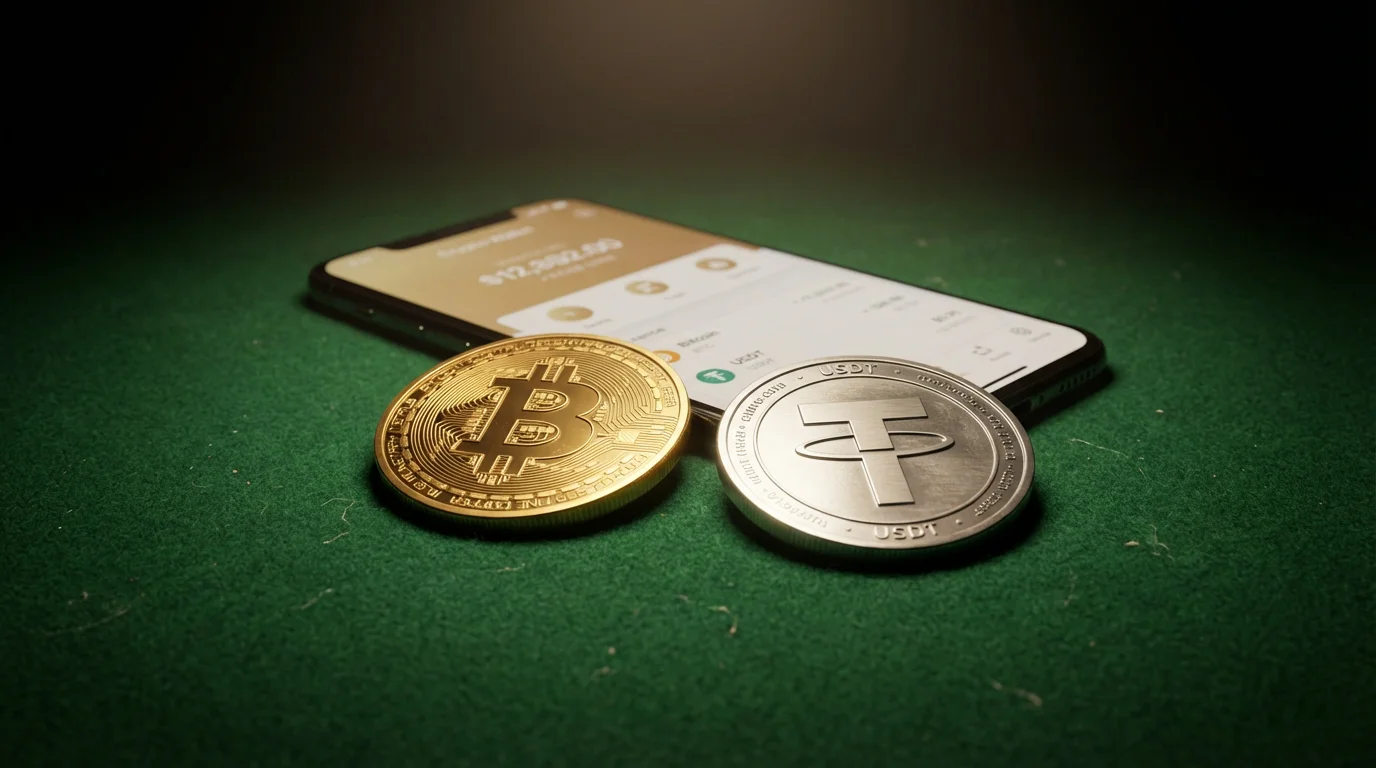
Bitcoin is recognisable. USDT is stable. Ethereum is fast. Each serves a different function in the context of non-GamStop casino deposits, and choosing the right one depends on what matters most to you: brand familiarity, price stability, or transaction efficiency.
Bitcoin remains the most widely accepted cryptocurrency at non-GamStop casinos, supported by virtually every crypto-enabled platform. Its advantages are ubiquity and liquidity — you can buy Bitcoin on any major exchange, and every casino that takes crypto accepts it. The disadvantages are well documented. Bitcoin’s price volatility means the value of your deposit can change between the time you send it and the time it confirms on the network. A £100 deposit sent in Bitcoin could be worth £95 or £105 by the time it arrives, depending on market movement during the confirmation window. Transaction fees on the Bitcoin network fluctuate based on congestion, ranging from under £1 during quiet periods to £5 or more when the network is busy. Confirmation times typically run between 10 and 60 minutes, though some casinos credit deposits after a single confirmation (roughly 10 minutes) while others require three to six confirmations.
USDT (Tether) is a stablecoin pegged to the US dollar, which eliminates the volatility problem almost entirely. When you deposit £100 worth of USDT, it remains worth approximately £100 regardless of what Bitcoin or Ethereum’s price does in the meantime. This predictability makes USDT the preferred choice for players who want to separate their gambling activity from cryptocurrency speculation. Most non-GamStop casinos that accept USDT offer it on multiple blockchain networks — typically Ethereum (ERC-20) and Tron (TRC-20). The Tron network is generally faster and cheaper for USDT transfers, with fees under £1 and confirmation times of a few minutes. The Ethereum network charges higher gas fees and can be slower during peak usage. Always check which network the casino supports before sending, because USDT sent on the wrong network will not arrive and may be permanently lost.
Ethereum occupies a middle ground. It is more volatile than USDT but less volatile than Bitcoin over short time periods, and its network processes transactions faster than Bitcoin’s in most conditions. Average confirmation times run between two and five minutes, with gas fees that vary but are generally moderate for straightforward transfers. Ethereum is accepted at most crypto-friendly non-GamStop casinos, though its adoption is slightly less universal than Bitcoin. The primary reason to choose Ethereum over Bitcoin is speed — if confirmation time matters to you and you are comfortable with moderate price fluctuation, Ethereum gets your deposit into your casino balance faster.
Other cryptocurrencies — Litecoin, Dogecoin, Bitcoin Cash, Solana — appear at some non-GamStop casinos but with inconsistent support. Litecoin offers low fees and fast transactions but limited adoption. Solana is extremely fast but not yet widely supported in the gambling sector. Unless you already hold these coins and the casino specifically supports them, Bitcoin or USDT are the pragmatic choices for UK players who prioritise reliability and availability over any specific technical advantage of a smaller-cap coin.
First-Time Crypto Deposit — Step by Step on Mobile
Setting up your first crypto casino deposit takes about ten minutes if you already have cryptocurrency in a wallet. If you are starting from zero — no crypto, no wallet, no exchange account — the process takes longer but is not technically difficult. Here is what each step involves.
You need a cryptocurrency exchange account to buy crypto with GBP. Coinbase, Kraken, and Bitstamp are among the exchanges available to UK users that allow GBP deposits via bank transfer or debit card. Registration on a regulated exchange requires identity verification (passport or driving licence, proof of address), which can take from a few hours to a couple of days depending on the platform’s backlog. Once verified, you deposit GBP and purchase your chosen cryptocurrency — Bitcoin, USDT, or Ethereum. Exchange fees for buying crypto typically range from 0.5% to 1.5% of the transaction amount.
Next, you need a personal crypto wallet. While you can send crypto directly from an exchange to a casino, this is not recommended. Many exchanges monitor outgoing transactions and will flag or block transfers to gambling-related addresses. A personal wallet acts as an intermediary: you send crypto from the exchange to your wallet, and then from your wallet to the casino. This two-step process adds a few minutes but avoids exchange-imposed gambling blocks. Trust Wallet, MetaMask (for Ethereum and ERC-20 tokens), and Exodus are popular mobile wallet options that install as apps on your phone.
With crypto in your personal wallet, navigate to the casino’s deposit page and select the cryptocurrency you want to use. The casino will display a wallet address — a long string of alphanumeric characters — and usually a QR code. On mobile, scanning the QR code from your wallet app is the fastest and most error-proof method. Never type a wallet address manually; a single incorrect character sends your funds to a nonexistent address with no recovery option. Confirm the transaction in your wallet, wait for the blockchain to confirm it, and the deposit appears in your casino balance. For Bitcoin, expect 10 to 60 minutes. For USDT on the Tron network, expect two to five minutes. For Ethereum, expect two to ten minutes.
The entire process — from exchange to wallet to casino — involves three separate transactions, each with its own fee. Exchange purchase fee, network transfer fee from exchange to wallet, and network transfer fee from wallet to casino. On a £100 deposit using USDT on Tron, the total fees might amount to £1.50 to £3.00. Using Bitcoin during a congestion period, fees could reach £8 to £12 for the same amount. Factoring in these costs before depositing avoids the frustration of seeing your casino balance arrive noticeably lower than the amount you intended to send.
Volatility, Gas Fees, and Transaction Risks
If you deposit Bitcoin and its value drops 5% overnight, your balance reflects that — assuming the casino denominates your account in crypto. This is the volatility risk that separates crypto casino banking from traditional fiat deposits, and it works in both directions. A player who deposits 0.01 BTC when Bitcoin is priced at £40,000 has a £400 balance. If Bitcoin rises to £42,000 before they withdraw, the same 0.01 BTC is now worth £420 in GBP terms. If it falls to £38,000, it is worth £380. The casino games themselves are unaffected — the RTP, the house edge, the bonus terms all operate independently of crypto price movements. But the real-world value of your bankroll fluctuates with the market.
Many non-GamStop casinos address this by offering accounts denominated in fiat equivalents, converting your crypto deposit into a GBP, EUR, or USD balance at the time of deposit. This eliminates price exposure during gameplay but introduces conversion risk at the point of withdrawal. If you deposit crypto at one exchange rate and withdraw at another, the difference adds or subtracts from your effective return. Stablecoins like USDT eliminate this issue almost entirely, which is a significant reason for their growing popularity among casino players who want crypto’s functional advantages without its speculative dimension.
Gas fees — the network transaction costs for processing blockchain transfers — are a per-transaction expense that hits small depositors hardest. A £5 Bitcoin network fee on a £500 deposit is 1%. The same £5 fee on a £50 deposit is 10%. Players making frequent small deposits should either use a low-fee network (Tron for USDT, Litecoin if supported) or batch their deposits into fewer, larger transactions to minimise the proportional cost.
Transaction irreversibility is the risk most first-time crypto users underestimate. If you send funds to the wrong wallet address, there is no bank to call, no chargeback to file, and no dispute resolution process that can recover the funds. Blockchain transactions are final by design. Double-checking the recipient address, using QR codes instead of manual entry, and sending a small test transaction before committing a larger amount are not optional precautions — they are essential habits for anyone using crypto for casino deposits.
Digital Currency, Analogue Risks
Crypto solves the banking problem. It doesn’t solve the gambling problem. This distinction deserves emphasis because the convenience of cryptocurrency deposits can obscure the underlying activity. Sending Bitcoin to a casino wallet is frictionless, fast, and private. Those same qualities — frictionlessness, speed, and privacy — also remove the natural pause points that traditional banking introduces. No card decline, no bank notification, no waiting period between the impulse to deposit and the deposit arriving. For players managing a gambling budget, the absence of friction is not always a benefit.
The privacy advantage of crypto is real but frequently overstated. Bitcoin transactions are pseudonymous, not anonymous — every transaction is permanently recorded on a public blockchain. If your wallet address is ever linked to your identity (through a KYC-compliant exchange, for example), your entire transaction history becomes traceable. USDT on the Tron and Ethereum networks is equally transparent. True privacy coins like Monero are accepted at a small number of non-GamStop casinos, but these are niche options. For most UK players, crypto offers practical privacy from banks and employers, not absolute anonymity.
The question for any UK player considering crypto casino deposits is not whether it works — it clearly does, and for many non-GamStop players it is the only reliable deposit method available. The question is whether you have built the infrastructure of self-management that the technology itself does not provide. Set deposit limits in your wallet or your casino account, track your transactions in a spreadsheet or budgeting app, and establish a clear boundary between funds allocated for gambling and funds allocated for everything else. Crypto makes moving money easy. Making sure the money moves in the right direction, and stops when it should, remains entirely your responsibility.