

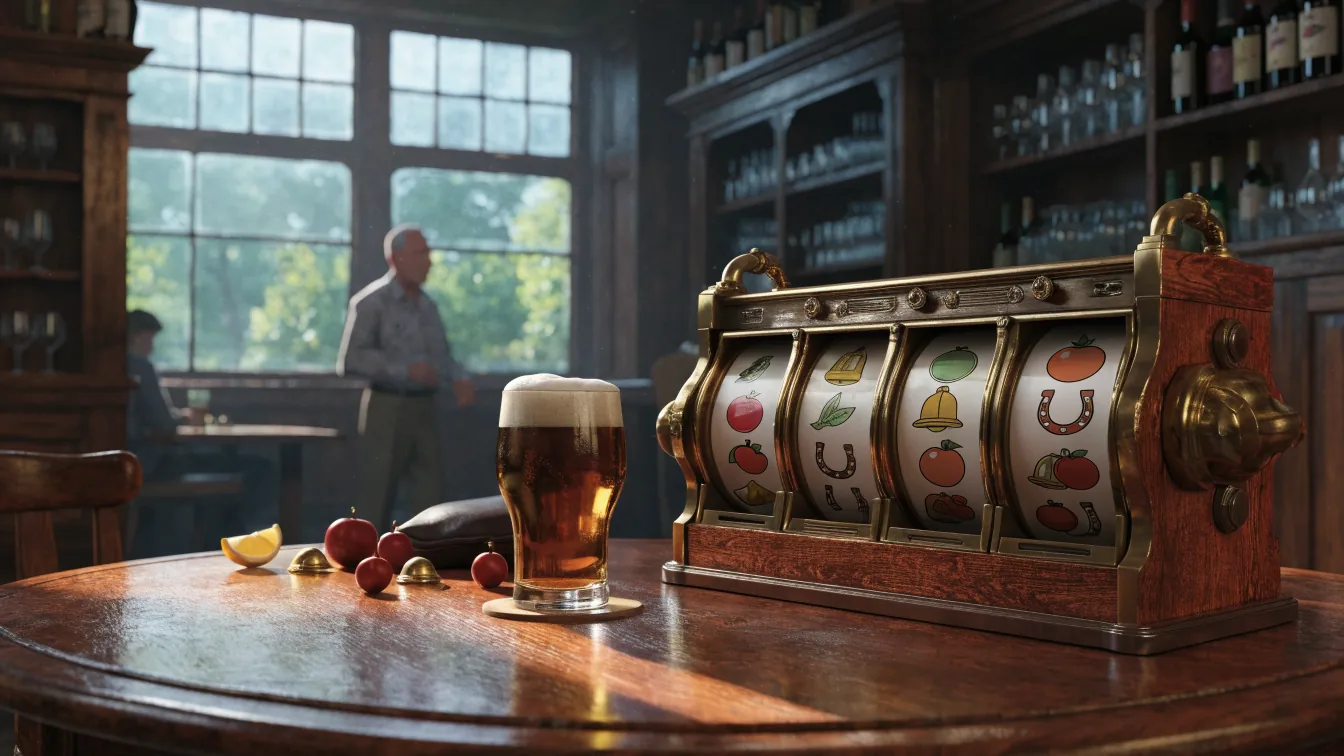
Learn how reel layouts, paylines, symbols and spin controls shape the experience, alongside demo play and bonus conditions.
What Makes a Classic Slot Feel Classic
A classic slot is recognisable before the first spin. The layout is usually compact, with reels arranged side by side and a small set of symbols repeated across them. Fruit, bells, bars and other familiar images belong to the visual language of the format, but the appearance alone does not determine how the game works. What matters is the relationship between the reels, the paylines and the symbols shown when the reels stop.
The appeal is partly its lack of clutter. Modern online slots can surround the reels with bonus stages, changing layouts and layers of animation. A classic slot tends to put the central event in plain view: the reels turn, stop, and display a combination. That simplicity is why searches for three-reel classic slots remain distinct from searches for more elaborate titles. A three-reel layout gives the game an especially direct appearance, although the number of reels by itself does not establish the full rules.
Progressive Slots Online in the UK: How Jackpots Work
The visible result is created by the game’s underlying software. Some slots use a random generator to determine the outcome of each spin. The symbols that appear are therefore not selected because a player has been waiting, has just won, or has increased the stake. On a regulated online game, past wins and losses do not alter the probability of the next spin. Timing and betting size do not turn a random result into a predictable one.
That point is easy to lose when the design resembles an old mechanical fruit machine. A physical machine may suggest that the reels are being stopped by gears, springs or a lever. An online classic slot reproduces the visual experience through software. The reels on screen are an animated representation of the result rather than a row of physical objects moving inside a cabinet.
Winnings depend on which symbols the player lines up according to the game’s rules. A matching arrangement may produce a win, while another arrangement may produce nothing. The important detail is that the game’s paytable defines which combinations count; the attractive appearance of a symbol does not give it value on its own. The same image can have a different role in another title, so the name “classic” does not create a universal set of winning combinations.
French Roulette Online Casinos in the UK
This is where I separate the mechanics from the practical side of online play. Mechanics describe what the game does: how the reels are arranged, how a result is generated and how the displayed symbols are assessed. Practical online questions concern the setting in which that software is offered: who operates the site, which rules apply to the service, and whether the available version is being presented lawfully to people in Great Britain. Those are separate decisions. A familiar reel layout is not evidence of a particular operator’s standards.
For classic slots online in the UK, the relevant regulatory framework is the Gambling Commission. It regulates gambling activity in the United Kingdom, including online casinos. Its remit also covers remote gambling offered to consumers in Great Britain when the key equipment is located elsewhere. In other words, the physical location of servers or other essential equipment does not by itself remove a remote gambling service from the British regulatory framework.
Casino Games: Slots, Live Tables and More
The Gambling Commission is Great Britain’s sole regulator for commercial gambling. It issues operating licences to businesses and personal licences to individuals working in regulated gambling operations. An operating licence concerns the company or other business providing the gambling service; a personal licence concerns an individual whose role falls within the licensing requirements. These are different permissions, attached to different parties.
That distinction matters because the phrase “classic online slots” describes a type of game, not a legal status. A slot may look like a traditional cabinet game while being delivered through a remote service. Its design says little about the organisation offering it. The regulatory question belongs to the operator and the way the service is supplied, not to the fruit symbols or the number of reels.
The same separation helps with claims about control. A licensed online game using a random generator is not made predictable by a player’s choices around the spin. Selecting a particular title, changing the amount staked or waiting after a loss does not create a reliable method for influencing a random outcome. The player can choose whether and how to participate, but cannot convert the visual simplicity of a classic slot into control over the result.
Market
United Kingdom
Language
English
Regulation
Gambling Commission
Classic slots retain their identity because the essential exchange remains easy to read: reels produce a symbol arrangement, and the game evaluates that arrangement under its rules. Online delivery changes the setting, not that basic idea. The cabinet becomes a screen, and the mechanical impression becomes software. The regulations and operator responsibilities sit around the game rather than inside its artwork.
That is the useful dividing line. The classic feel comes from the compact reel display and familiar symbols. The outcome comes from the game’s programmed rules and, in some titles, a random generator. The questions about legality and the business providing access belong to the online gambling service itself.
Three Reels, Lines and Demo Play
A classic slot machine is easiest to understand when the layout is treated as a small display rather than a collection of promotional features. The reels sit side by side, each carrying a sequence of symbols. When a spin is started, the reels move and then stop in their positions. The visible arrangement is read against the game’s payline structure.
The familiar three-reel format remains the clearest example. It gives the machine a compact appearance: a symbol on one reel, a corresponding symbol on the next, and another on the final reel. Some classic slot machine games use a single horizontal line through the centre. Others show several possible lines across the reel window, including lines that run above or below the centre position.
That distinction matters because the reel window and the active lines are not the same thing. The window is what appears on screen. The lines determine which arrangements the game checks when the reels stop. A title may display several rows of symbols while only one line is active, or it may allow multiple lines to be played at once. The paytable normally shows the available patterns in a diagram, making it possible to see how the game reads the screen before any stake is placed.
Crash Casino Games in the UK: How They Work
Some slots allow the number of active lines to be changed manually. This control is often located near the spin button, alongside the stake controls. Reducing the active lines creates a simpler setup, while activating more lines changes which parts of the reel display are included in the result check. The exact arrangement depends on the title, so the control should be read as a game setting rather than assumed to work identically across all classic slots.
That is one of the small differences between a physical-looking classic slot machine and its online version. On an old-style cabinet, the available lines may be fixed by the machine. Online, the interface can expose settings that would have been hidden behind the cabinet design. A player may see buttons for lines, stake, total wager and spin, with the paytable opening in a separate panel. The layout is still based on the same reel-and-line idea, but the information is more visible.
I used to check the line display before looking at anything described as an “extra.” The word suggests added value, but often it simply refers to a setting that changes how the machine evaluates the visible reels. A line control is not a bonus feature. It is part of the basic operating panel.
How the layout is read
The paytable is the working document for a classic slot machine. It normally identifies the symbols, the line patterns and the combinations recognised by the title. It may also show whether a winning arrangement must begin on the left side, follow a particular direction or appear on a specific line. Those details cannot safely be inferred from the artwork.
The most useful first check is therefore practical:
- identify the reel window;
- locate the active-line control;
- see how the selected lines are highlighted;
- open the paytable;
- check which visible positions each line crosses;
- confirm how the total stake changes when the settings are adjusted.
This process separates the appearance of a machine from the way it operates. A brightly coloured display can still use a very plain layout, while a simple-looking title may include several line selections. The display should be understood before the pace of spinning becomes the main focus.
Classic slot machines also vary in how much of the layout is visible at once. A narrow reel display may make the traditional format obvious, while a larger online presentation can include extra rows around the central line. More visible symbols do not automatically mean that every position is active. The line map remains the authority.
Using demo play as a layout check
A demo version provides a way to inspect the machine without beginning with a wager. Its main value is not entertainment dressed up as a substitute for real-money play. It is a working preview of the interface: the reel area, the line controls, the paytable and any title-specific settings can be examined in their normal positions.
Free classic slot games are particularly useful at this stage because the layout can be followed without the pressure of deciding whether to continue. A demo session can show whether changing the active lines alters the controls as expected, whether the paytable is easy to find and how the machine presents a completed spin. It also helps distinguish a genuinely simple classic slot from a title that only uses traditional artwork while adding a more involved structure.
The same approach applies to classic slots online real money, but the order matters. The machine should be understood in demo mode first, then considered for wagering only after the line settings and display make sense. Demo play does not predict future outcomes and does not turn a losing arrangement into a meaningful signal. It teaches the interface.
Fastest Payout Online Casino UK: Keno vs Cash-Out
That distinction is important because familiarity can be mistaken for control. Once the buttons and line map feel comfortable, the machine may appear easier to manage than it is. A demo removes the financial consequence of learning where the controls sit; it does not change the underlying result process when money is involved.
Time and deposit limits are also recommended as part of responsible account management. They belong alongside the layout check, not after a long session has already developed. In my experience, a clear boundary works best when it is set before the machine becomes absorbing.
The strongest use of free online classic slot games is therefore straightforward: inspect the reels, understand the active lines, read the paytable and learn the controls before wagering. Nothing more needs to be claimed. The machine’s design becomes familiar, while the decision to play for money remains separate.
How to Assess a Classic-Slot Casino Without a ‘Best’ List
A claim that one operator is the “best classic slots casino UK” sounds precise, but it rarely is. Best for what? A broad catalogue, low entry stakes, familiar fruit machine games, a responsive web version, or access at a particular time? Those are different tests, and a site that performs well on one may be unhelpful on another.
I have always treated “best” as a conclusion that needs a stated measure behind it. Without that measure, the word is advertising shorthand rather than a useful assessment. A more honest review looks at what can actually be checked: the range of classic titles, the available stake levels, whether the games can be tried in a non-wagering mode, and whether the casino’s current lobby supports the type of play being considered.
DO
- Check the range of classic titles available
- Verify the available stake levels
- Use demo mode to understand the interface
DON’T
- Assume a “best” label is a measurable assessment
- Mix up game mechanics with operator standards
- Rely on visual clusters to judge a result
Start with the catalogue, not the slogan
The first practical question is whether the casino offers the particular style of classic slot being sought. “Classic” can refer to a compact reel layout, fruit machine games, familiar high-value symbols, or a straightforward payline structure. It does not describe one fixed catalogue shared by every operator.
A casino may promote a large slot library while carrying only a small selection that fits this style. Another may have fewer total titles but a more relevant group of simple, recognisable games. Counting every slot in the lobby therefore tells little about the quality of the classic selection.
A useful assessment records the titles that are actually visible, rather than repeating a headline about choice. It also avoids assuming that a game remains available merely because it appeared in an older review. Game supply changes, and a listing does not automatically mean that a title is eligible for a current deposit offer or promotion. Those are separate checks.
The same distinction applies to searches for the best online classic slots casino. A casino can be suitable for someone looking for a particular game and unsuitable for someone who wants a wide range of similar titles. There is no contradiction in that result. It is simply a matter of matching the catalogue to the intended use.
Stake range is a separate test
Game selection and affordability should not be blended into one score. Two casinos may display the same classic title while presenting different permitted stakes. The relevant question is not which site uses the loudest “real money” wording, but whether its available stake range fits the intended budget.
For customers aged twenty-five and over, a specialist review reports a Great Britain online-slot cap of £5 per game cycle.
Online play can provide access to more titles than a single physical venue, with games available at different stakes and at times that do not depend on a machine being free in a premises. That convenience changes the comparison: the operator is being assessed as a route to a selection of games, not as the owner of one machine.
For customers aged twenty-five and over, a specialist review reports a Great Britain online-slot cap of £5 per game cycle. That is a reported market condition, not evidence that every game or casino offers the same practical experience. It also does not make one operator “best”. The cap sets an upper boundary for the relevant play, while the casino’s own game configuration determines which lower stake options are displayed.
I would therefore keep two notes when comparing sites:
- which classic titles are currently listed;
- which stake levels are available on those titles.
That small separation prevents a broad catalogue from disguising an unsuitable stake range.
What a fair comparison can and cannot say
A responsible comparison can describe a casino’s apparent strengths in limited terms: a useful selection of classic-style titles, several stake options, or convenient access to online play. It can explain whether the site suits someone searching for classic slots for real money, provided the wording does not turn availability into a guarantee.
It cannot honestly declare a universal winner without a stable test and current evidence for every operator being compared. A “top” label is especially weak when the list has not been checked against the live lobby, current game rules and present eligibility conditions. Promotional placement is not proof of game quality, and a familiar title is not proof that the surrounding casino is suitable.
The same care is needed with free classic slots. A no-download demo can be useful when the aim is to inspect a layout before wagering, but its presence does not establish that the operator has the strongest real-money catalogue. Free play and paid play answer different questions: one concerns learning or exploring a title, while the other concerns the conditions under which money can be staked.
That distinction often disappears in promotional copy. “Free” describes the mode of access; it does not automatically describe the casino, the full catalogue or the terms attached to later play.
A practical assessment without a ranking
The most defensible approach is a short, transparent checklist:
- Relevant selection: are there enough classic-style titles to make the casino useful for the intended preference?
- Current availability: are those games present in the current lobby rather than only in an old article or promotional image?
- Stake range: do the displayed options fit the planned level of spending, within the applicable Great Britain slot cap?
- Mode of play: is a demo available when the purpose is to examine the layout before wagering?
- Specific suitability: does the operator appear appropriate for the stated need, rather than being labelled the best for everyone?
This produces a description instead of a ranking. It also leaves room for the fact that priorities differ. Someone interested in a narrow group of fruit machine games may value selection above everything else. Someone else may care more about finding a lower stake option or playing at a convenient time.
That is the useful conclusion from the inside: assess the catalogue and the stake range separately, record what is currently available, and reserve “best” for a clearly defined comparison. Anything broader is usually a slogan wearing a review’s clothing.
Symbols, Lines and the Result of a Spin
A classic slot shows its result through the symbols that appear in the reel windows. Once the reels stop, the important question is not whether the display looks familiar or colourful. It is which symbols occupy the positions connected by an active line. That combination is what determines whether the spin produces a win.
The principle is simple: the machine compares the symbols shown after the spin with the winning combinations defined in its paytable. The paytable is the game’s working reference. It indicates which symbols can form a winning pattern, how those symbols must be arranged, and what each completed combination pays at the selected stake.
This is why two neighbouring symbols may not have the same significance. A symbol can be visible on the screen without contributing to the result if it is outside the line being evaluated. The display shows the whole reel window, but the game checks the relevant positions according to its rules. What matters is not every symbol present, but the symbols connected in the required pattern.
How a line produces a result
A winning line normally travels across the reels in a defined route. It may run straight through corresponding positions, or follow another pattern shown by the game. When matching symbols occupy the required positions along that route, the game recognises the combination and applies the corresponding paytable value.
The exact arrangement varies between titles. One game may require matching symbols to begin from the first reel and continue across adjacent reels. Another may use a different evaluation rule displayed in its paytable. The visual appearance of the reels does not explain these details on its own; the paytable does.
Fast Payout Online Casinos in the UK: What to Check
That distinction matters when looking at classic slot games online. A row of identical symbols may look like an obvious win, yet produce no payout if the row is not an active line or if the game requires a different arrangement. Equally, a combination that appears less prominent may count because it follows the route the machine evaluates.
I used to see players judge a result by the largest symbol cluster on the screen. That is an unreliable shortcut. The line decides.
The role of the paytable
The paytable translates the machine’s visual language into a result. It normally identifies the available symbols and shows the combinations associated with them. It also explains how the game treats a line, the order in which symbols must appear, and any special rules attached to a particular combination.
A symbol’s appearance does not establish its value by itself. A familiar fruit image may be part of a winning combination, but its payout is determined by the title’s rules rather than by the picture. The same applies to traditional icons, letters, numbers or themed images. The artwork creates recognition; the paytable supplies the meaning.
This is especially relevant when comparing classic casino slot games. Two titles can use similar-looking fruit or bar imagery while assigning different results to similar arrangements. The theme may suggest that the games belong together, but it does not make their paytables interchangeable.
The same caution applies to a classic fruit slot game offered in a free or demo mode. The screen can reproduce the layout and show how the symbols land, but the game’s own paytable remains the authority for interpreting a combination. The visual result should be read against that title’s rules, not against expectations formed from another machine.
What the reels are showing
After a spin, the reel windows present a fixed arrangement of symbols. Some are aligned with an active line; others sit above or below it. A player assessing the result therefore needs to separate three things:
- the symbols visible in the window;
- the line or lines being evaluated;
- the combination recognised by the paytable.
Keeping these elements separate makes the result easier to understand. Seeing several matching symbols is not enough on its own. They must appear in the positions and order required by the game. A symbol that is one space away from the relevant route may have no effect on that particular outcome.
The stake also forms part of the payout calculation, because the paytable’s value is applied according to the wager associated with the evaluated line or combination. The result still begins with the symbol arrangement. A larger stake does not turn an unrelated pattern into a winning one; it changes the financial value assigned under the game’s rules.
Reading a completed spin
The clearest way to inspect a spin is to follow the line from its starting point across the reels, then compare each position with the paytable. If the required symbols match in the required sequence, the game records the relevant winning combination. If they do not, the visible arrangement does not create a payout merely because it resembles a familiar pattern.
This gives classic slots online UK players a practical way to read the screen without relying on guesswork. The result is neither a visual popularity contest nor a reward for having symbols somewhere in the window. It is the outcome produced by the line, the symbols occupying it and the rules set out for that particular title.
The display may be old-fashioned. The interpretation is precise.
Playing Online: Features and Spin Controls
Online classic slots preserve the familiar reel display, but the digital version can add features that are difficult to reproduce on a physical machine. The exact combination belongs to the individual title: one fruit machine game may keep its presentation simple, while another adds symbols, bonus rounds and extra controls around the reels.
Wild Symbol
Can substitute for another symbol in a winning combination to complete a pattern.
Free Spins
A sequence of spins triggered under specific conditions set by the game.
Pick-style Mini-game
A feature where selecting displayed choices reveals an associated outcome.
A wild symbol can substitute for another symbol in a winning combination, where the game’s rules allow it. Its purpose is to complete a combination rather than act as a separate ordinary symbol. The paytable normally explains which symbols a wild can replace and whether any exceptions apply. That detail matters because “wild” describes a function, not one universal feature.
Free spins are another possible addition. They create a sequence of spins under the conditions set by the game, sometimes after a particular combination or bonus event. A pick-style mini-game works differently: several displayed choices appear, and selecting one reveals the associated outcome. It may award a feature, a prize or another stage of the bonus. These extras are not standard across all classic slots.
The spin controls are also part of the online experience. A normal spin button starts the reels, while a quick-spin option can change the visual presentation or speed of the reel animation where that title provides it. It does not alter the random result. I have always treated that distinction as important: a faster display is not a stronger spin.
Online Keno Casinos in the UK: Licensing and Play
Autoplay requires particular care in Britain. Although autoplay can appear among the general features associated with online fruit machine games, it is not available for online slots in Britain. Spins must last at least 2.5 seconds, so a British online slot cannot offer a control that automatically starts one spin after another. The controls therefore remain manual, even when the interface includes other shortcuts.
Mobile access is another practical difference between a physical machine and a digital title. A slot may be designed to work through a responsive web version, with the reels and buttons adapting to a smaller screen. This can make the same game usable across desktop and mobile devices, although the arrangement of the controls may change. A compact display can also place the paytable, balance information and feature buttons behind separate panels.
The result is a play interface with several layers: reels, spin controls, information screens and, in some titles, bonus features. None of those additions makes every classic slot identical. The title determines what is present. Keep it manual.
Real-Money Play and the Conditions Behind a Bonus
Real-money classic slots are not simply a matter of depositing funds and treating every advertised spin as free value. A promotion has its own conditions, and those conditions can determine whether the bonus is useful at all. The important distinction is between the headline offer and the amount of play required before any associated balance can be withdrawn.
Bonus Terms
Read the wagering requirements carefully, as they determine when winnings can be withdrawn.
A wagering requirement means that bonus funds, winnings, or both must be played through before withdrawal is permitted. The wording matters. “Extra spins” may describe the number of spins displayed in an advert, while the terms decide when those spins are granted, which games qualify, and what happens to winnings produced by them.
The Sharkanade Slot provides a precise illustration, but not a general rule for every UK promotion. An affiliate review reports that a 40x wagering requirement must be met to receive 25 extra spins. The same reported offer says that the bonus must be wagered 30 times before withdrawal. These are separate conditions to read together: one relates to qualifying for the extra spins, while the other governs the route towards withdrawal. Promotional terms can change, so the current wording attached to the offer takes priority over an old description.
In practice, the relevant checks are straightforward:
- whether the requirement applies to the deposit, the bonus, winnings, or a stated combination;
- whether the named classic slot is eligible for the promotion;
- whether there is a time limit or another condition in the current terms;
- whether the extra spins generate withdrawable winnings or only further bonus credit.
That last distinction is often buried beneath “free” language. Free does not mean unconditional.
Real-money play also means keeping the bonus separate from the underlying slot. The game’s normal rules determine the result of each spin; the promotion determines how any bonus-related balance may be used afterwards. Mixing those two layers makes an offer appear simpler than it is. I have always treated the headline as the beginning of the assessment, never the value itself. Read the conditions first.
Classic Slots in the UK: Market Context
Classic slots sit within a much larger regulated online-slots market in Great Britain. Their familiar presentation may resemble older fruit machine games, but the surrounding market is digital: operators offer titles through remote gambling services, with access at different stakes and times than a physical machine would allow.
A specialist market report citing UK Gambling Commission operator data recorded £773 million in gross gambling yield from online slots between January and March 2026. That figure describes the reported online-slots market for the period; it is not a performance score for any individual classic slot. Nor does it show that a particular reel layout, symbol set or theme is more likely to pay. Market size and game quality are separate questions.
The regulatory setting matters because remote gambling supplied to consumers in Great Britain falls within the Gambling Commission’s remit, wherever the operator’s key equipment is located. The Commission is Great Britain’s sole commercial gambling regulator and issues operating licences to businesses, alongside personal licences for relevant individuals. The Gambling Act 2005 provides the wider legal framework in England, Wales and Scotland.
For someone comparing classic slots in the UK, this context separates three things that promotional copy often blends together: the style of the game, the scale of the online market and the status of the operator offering it. A large market does not make every title suitable, and a familiar fruit-machine appearance says nothing by itself about the conditions attached to a particular spin.
Live Baccarat Online Casinos in the UK: How to Choose
The reported market total is therefore useful as background only. It shows that online slots form a substantial part of regulated gambling activity, while leaving the actual assessment of a classic slot to its rules, presentation and available play conditions.
Scale is not quality.
Free Classic Slots as a Way to Learn the Layout
A free classic slot is best treated as a practice mode, not as a promise of anything equivalent to paid play. The purpose is straightforward: to see how the screen is arranged and understand what each control does before money is placed on a spin.
This matters because a compact fruit-machine design can still contain details that are easy to miss. The demo view may show the reels, the paytable, the active lines, the stake control and the button used to start a spin. It also gives time to identify where game information is displayed, how winning combinations are presented and which features appear during play.
I have found demo play most useful when it is approached as a short inspection rather than endless button pressing. The layout becomes familiar, and the paytable can be read without the distraction of watching a balance change. That distinction is important: practice credits have no cash value, so a result in a free version is not a financial outcome.
A demo can also reveal whether the presentation suits the player’s habits. Some interfaces place controls close together; others give more space to the reels or game information. A responsive web version may display the same title differently on a smaller screen, making a no-cost session useful for checking readability and navigation.
Free play does not remove the need for restraint if wagering follows. Deposit or time limits are recommended before real-money activity begins. Setting them in advance turns the move from a demo to paid play into a deliberate decision, rather than an automatic continuation of the session.
Penny Slot Machines in the UK: Stakes and RTP
The practical order is simple: inspect the layout, read the information, test the controls, then decide whether wagering belongs in the plan. No balance pressure.
Fruit-Slot Holds and Nudges Vary by Title
Holds and nudges are among the features that give a classic fruit slot its familiar machine-room character, but they are not a standard package applied identically across every title. The button labels may look similar while the conditions, timing and number of available actions differ from one game to another.
A hold keeps a selected reel or symbol in place while the remaining reels are given another chance to change. This can make a spin feel more interactive, because part of the displayed arrangement is temporarily fixed rather than replaced immediately. The held position may be chosen manually, or the game may present a hold opportunity as part of its own rules.
A nudge moves a reel by a position, allowing a nearby symbol to enter view. It is not a promise that a winning combination will appear. The result still depends on the symbols eventually displayed and on the title’s programmed rules. In some games, several nudges may be available during one spin; in others, the feature appears only when a particular situation has occurred.
The same variation applies to holds. An online fruit machine game may allow multiple holds on a single spin, while another may restrict the feature to specific symbols, rounds or conditions. Some titles may offer holds and nudges together; others may use only one of them, or neither.
I found this distinction important when checking machine descriptions: a familiar control does not prove that every title handles it in the same way. The feature panel and paytable explain what is active in that particular game. Marketing shorthand often says “classic” and leaves the rest unsaid.
Live Blackjack Online Casinos in the UK: Licensing
The title sets the rules.
Reading Classic Slot Machine Symbols
Classic slot machine symbols are the visual language of a game. They show what has landed on the reels and help establish whether the displayed arrangement corresponds to a winning combination. The important point is not how familiar a symbol looks, but where it appears in relation to the active payline.
A result is read across the reels according to the game’s own layout. Matching symbols may need to sit next to one another from a particular starting position, while combinations elsewhere may have no value. A symbol that looks prominent on the screen therefore does not automatically create a win. Position matters.
This is where promotional descriptions can make a simple mechanism sound more mysterious than it is. “Big symbols” may be colourful, high-value images, but their value still depends on the arrangement specified by the machine. The same applies to lower-value icons: a modest-looking match can count when it occupies the required places.
I have found that the clearest way to read a spin is to separate three things: the symbols shown, the line being followed and the combination recognised by that game. The paytable explains the relationship between them. It identifies the symbols and shows which arrangements produce a payout, rather than leaving the result to visual guesswork.
The reels can display several familiar images at once, but only the symbols forming a qualifying line affect the outcome. A near-match may look persuasive while remaining only that—a near-match. Past results do not alter the chance of the next spin, and the size of a previous win does not make a particular symbol more likely to appear.
In practical terms, classic slots are read by matching symbols to positions, not by judging the screen as a whole. That distinction keeps the result understandable. No visual hunches.
Can I play fruit machine games for free?
Yes, demo versions let you try a game’s layout and features before wagering.
Are there age restrictions to play online fruit machines?
Yes. You must be at least 18 to gamble online, and operators verify customers’ age and identity when they create an account.
How do I know if a site is trustworthy?
Check that the operator holds a UK Gambling Commission operating licence. The Commission regulates online casinos and remote gambling offered to consumers in Great Britain.
Are online fruit machine games fair?
Licensed sites use random number generators, so each spin is independent and unpredictable. Past results, timing and stake size do not change the odds of the next spin.